
Loading...
Serving Kailua, HI and surrounding areas. (808) 556-0595
Advanced Kailua Insulation serves Maunawili, HI with spray foam insulation, attic insulation, and vapor barrier installation built for the valley's wet windward climate - free estimates and same-week scheduling, serving the Kailua area since 2015.
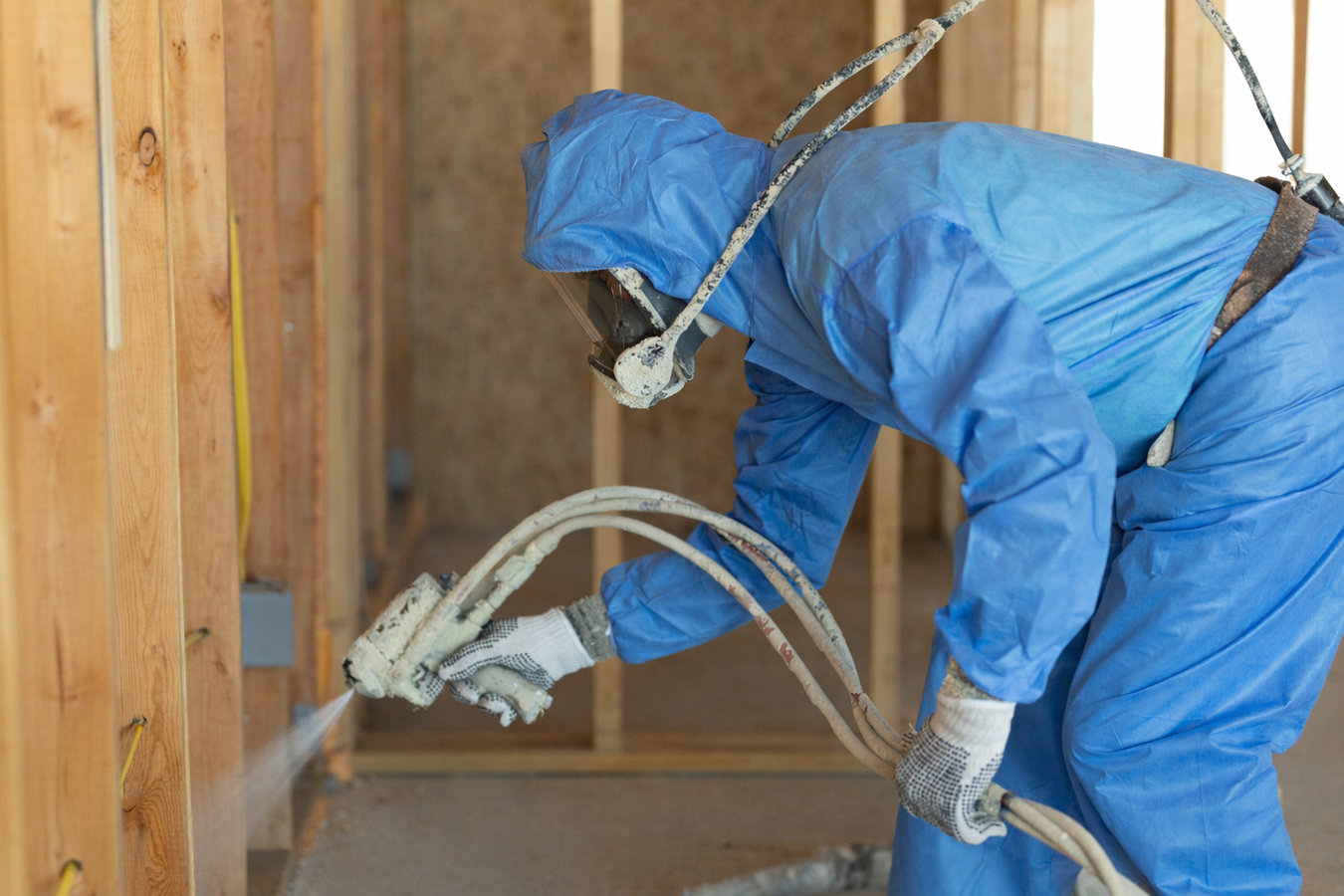
Maunawili sits in one of the wettest valleys on Oahu, and spray foam is the insulation material best matched to that environment. Closed-cell foam bonds directly to surfaces, resists moisture absorption, and acts as a vapor barrier - protecting your home from the inside out in a place where humidity never fully lets up. Learn more about our spray foam insulation services.
Valley homes in Maunawili deal with heat radiating down from the roof during sunny afternoons and moisture pressing up from the saturated ground below. Addressing the attic floor with the right insulation material breaks that overhead heat load and makes air conditioning far more effective - a meaningful gain when Hawaii electricity rates are what they are.
Maunawili's soil stays saturated from frequent heavy rainfall, and ground moisture migrates upward through crawl spaces and slab edges into wood framing and flooring. A properly installed vapor barrier stops that migration at the source - protecting structural components and improving indoor air quality in a valley where moisture is a year-round issue, not just a seasonal one.
Ranch-style homes throughout Maunawili often have low attic profiles and small access hatches that make batt installation difficult. Blown-in material installs through a single hose, fills every corner and gap in the attic floor evenly, and works well in the tight spaces common to mid-century single-story homes in this valley.
The combination of frequent rainfall and clay-heavy soils in Maunawili keeps crawl spaces damp year-round. Uninsulated crawl spaces allow that ground moisture to migrate into subfloor framing and lower wall sections, accelerating wood rot and mold growth in a climate that already puts significant strain on building materials.
Older Maunawili homes lose conditioned air through penetrations around recessed lights, plumbing chases, and attic hatches that let warm, humid outside air cycle in continuously. Air sealing closes those paths and makes existing insulation perform the way it was designed to - especially valuable in a home where the AC already runs hard against valley heat and humidity.
Maunawili is a small residential valley on the windward side of Oahu, tucked against the base of the Ko'olau Mountains in Honolulu County. The valley position means it collects moisture from every direction - trade wind rain coming over the Ko'olau Range from the north, runoff from the mountains above, and ground moisture from soils that rarely fully dry out. Annual rainfall in the Kailua-Maunawili area can exceed 70 inches in some spots, far above what most mainland insulation products are designed to handle over the long term. Fiberglass batts that absorb that moisture gradually lose R-value, develop mold, and require replacement much sooner than they would in a drier environment.
The housing stock adds to the challenge. Most homes in Maunawili were built between the 1960s and 1990s, a period when Hawaii construction relied on open-air design and natural ventilation rather than insulation and sealed envelopes. Once air conditioning became standard, those homes developed significant thermal efficiency problems - and in Hawaii, where electricity rates are among the highest in the country according to the U.S. Energy Information Administration, fixing those problems has a direct and measurable impact on monthly costs. Choosing insulation materials suited to a wet valley environment - rather than generic options designed for dry mainland climates - is the difference between a lasting upgrade and one that needs to be redone in five years.
Our crew works throughout the Kailua area regularly, and Maunawili is part of that coverage zone. The valley is bordered by Kailua town to the east and the Ko'olau ridgeline to the west, with the Maunawili Stream running through its center. Properties here tend to sit on larger lots than you would find in central Kailua, with mature trees and dense landscaping that reflect how wet and fertile the valley is. Homes are typically single-story or modest two-story designs, many of them wood-frame or concrete block construction from the 1970s and 1980s.
Working in Maunawili means accounting for the constant moisture the valley produces. Attic spaces here tend to run wetter than attics in Kailua town, and crawl spaces under valley-floor homes deal with ground moisture that does not dry out between rain events. All permit work for Maunawili goes through the Honolulu Department of Planning and Permitting, and we pull permits there regularly for projects on the windward side. The valley is accessible via Auloa Road off the Pali Highway, and we schedule regularly on that route.
We also serve the immediately surrounding communities, including Koolaupoko and Kailua. If your home is anywhere in this part of the windward side, we are familiar with the conditions and can get to you quickly.
Contact us by phone or through the online form. We respond within one business day and can typically schedule your on-site visit within the same week - no long wait times for Maunawili homeowners.
We walk your attic, crawl space, or walls at no charge and give you a written estimate with itemized costs before asking you to commit. No pressure, no surprises - and we flag any moisture issues we spot while we are there.
Our crew arrives on the scheduled date with all equipment. Most Maunawili insulation jobs are done in a single day. For spray foam applications, you will need to stay out of the treated area for a few hours while the foam cures fully.
We walk you through the finished work so you can see exactly what was done. If you have any concerns in the days after installation, call us - we come back and look, no runaround.
Free estimates for Maunawili homeowners. No obligation until you approve the scope and the cost.
(808) 556-0595Maunawili is a small, low-density residential community tucked into a valley on the windward side of Oahu, within Honolulu County. The neighborhood sits at the base of the Ko'olau Mountain Range, which channels consistent trade wind moisture down into the valley year-round and creates one of the wetter microclimates on Oahu. Properties here tend to sit on larger lots than you find in central Kailua, with mature tropical vegetation that grows dense in the wet conditions. The well-known Maunawili Trail runs through the area and connects to the Ko'olau ridgeline, making the valley a recognizable destination for hikers from across the island.
The housing stock is primarily single-family detached homes built between the 1960s and 1990s - a mix of wood-frame and concrete block construction on spacious valley-floor lots. Many properties have backed against or near state forest reserve land, with overhanging tree canopy that keeps roofs shaded but also traps moisture and debris. Maunawili is accessed via Auloa Road off the Pali Highway and has no separate municipal government - all services and permits fall under the City and County of Honolulu. Nearby Kailua to the east is the nearest town center, and we serve both communities regularly. We also cover Waimanalo to the south, which shares a similar windward character.
Seals gaps and insulates surfaces in one application for lasting efficiency.
Learn MoreFills hard-to-reach cavities with loose-fill material for complete coverage.
Learn MoreInsulates below-grade spaces to control moisture and improve efficiency.
Learn MoreHigh-density foam that provides superior R-value and moisture resistance.
Learn MoreProfessional insulation solutions scaled for commercial buildings and facilities.
Learn MoreBlocks ground moisture from entering your crawl space and living areas.
Learn MoreInstalls protective barriers to prevent moisture damage throughout your home.
Learn MoreUpgrades insulation in existing homes without major renovation disruption.
Learn MoreMaunawili homeowners who reach out this week can typically schedule an on-site assessment within a few days - start before the next rain event finds a weak spot in your home.