
Loading...
Serving Kailua, HI and surrounding areas. (808) 556-0595
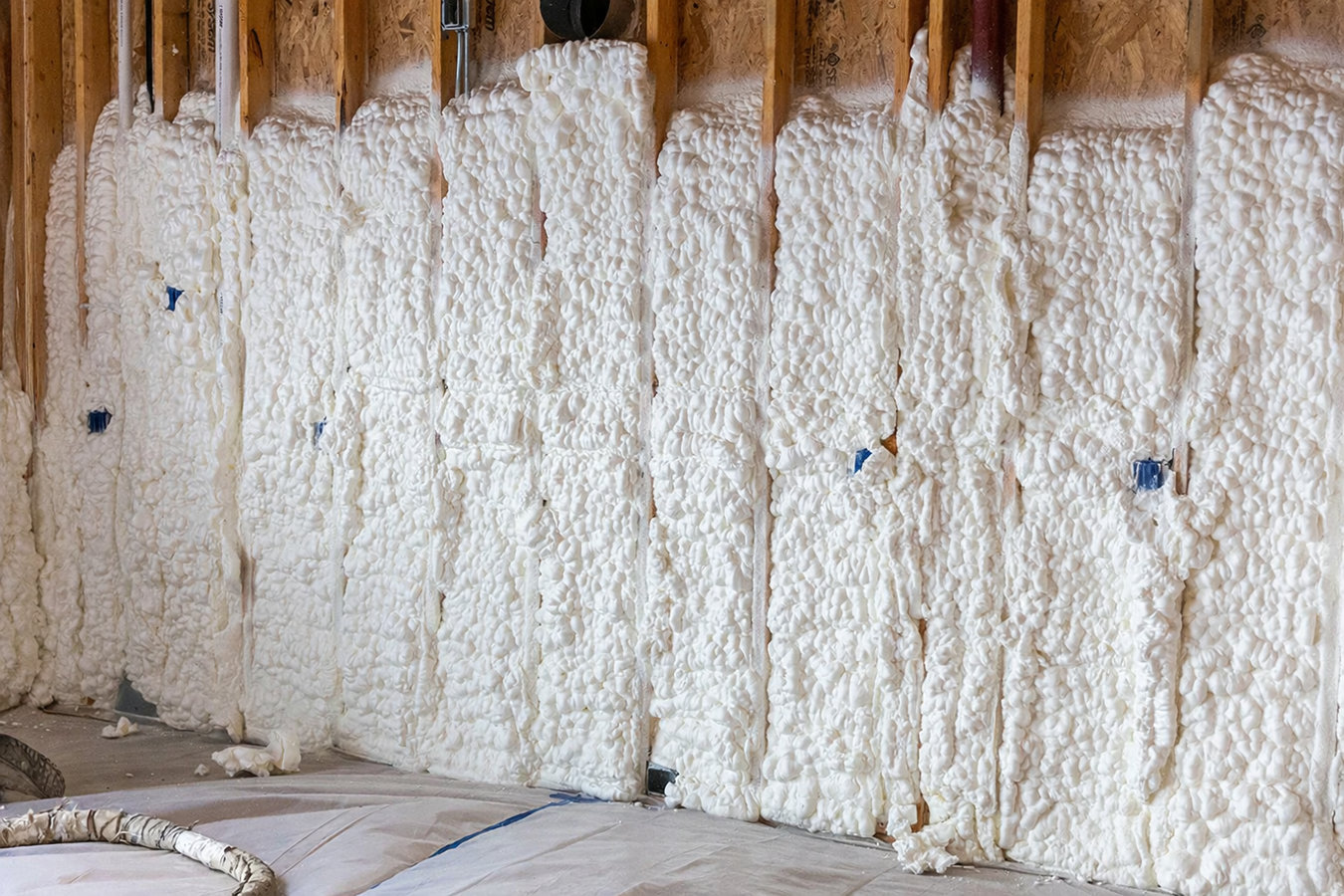
Kailua's windward humidity finds every gap in your home's envelope. Closed-cell spray foam seals those gaps and gives you the highest insulating value per inch available - so your AC actually keeps up.
Closed-cell foam insulation in Kailua is a two-part spray-applied product that expands and hardens into a rigid, dense layer on contact with walls, ceilings, or crawl space surfaces. Most residential jobs covering one area - an attic or crawl space - are done in a single day. The foam is fully cured and safe to be around within 24 hours of application.
What makes closed-cell foam especially suited to Kailua is that it does two things at once: it slows heat transfer and acts as a moisture barrier. Most insulation materials only do the first, and many actually absorb humidity and lose effectiveness over time in a climate like Kailua's. If you're weighing your options, it's worth comparing closed-cell foam against open-cell foam insulation, which uses a different formula better suited to certain applications.
If your air conditioning seems to run without ever making the house feel comfortable, air is likely escaping through gaps in your attic, walls, or crawl space. In Kailua, where AC runs year-round, this is one of the clearest signs that your home's barrier between inside and outside is not doing its job. Closed-cell foam seals those gaps so your system isn't fighting the outdoors all day.
Kailua's windward humidity means that uninsulated or poorly sealed spaces can accumulate moisture over time, leading to that damp, musty smell that signals a problem. If you see water stains on attic framing or feel dampness in a crawl space, your current insulation is not keeping moisture out. Closed-cell foam creates a seal that dramatically reduces how much humid air can enter those spaces.
If your electricity bill has been rising but you have not added new appliances or changed how you use your home, your insulation may be degrading or was never adequate. Hawaii's electricity rates are among the highest in the country, so even a modest efficiency loss shows up quickly on your bill. An assessment can tell you whether your home's envelope is the culprit.
Many Kailua homes from the post-war decades were built with little or no insulation, relying instead on natural airflow. If your home is in that age range and has never had insulation work done, you are likely losing a significant amount of conditioned air every day. Attics are the single biggest source of heat gain in Hawaii homes, and they're where closed-cell foam makes the most immediate difference.
We apply closed-cell foam across a range of residential applications in Kailua. Attic rooflines and crawl space walls are the most common starting points - they're where heat and humidity gain is greatest in windward-side homes. We also apply foam to exterior wall cavities during renovations and to band joists and rim boards where floor framing meets the foundation. For Kailua homes that also need comprehensive air sealing, we coordinate closed-cell foam work with spray foam insulation across multiple areas of the home in a single mobilization.
Every job starts with a site assessment. We look at what's already there, where the biggest gaps are, and what thickness the application requires to hit the right performance level for your home. We do not quote a project until we've seen the space - that is the only way to give you a number that actually reflects the work.
Ideal for Kailua homes where heat radiates through the roof, turning attic spaces into heat sources that stress the AC system.
Best for homes where ground moisture and outside air enter from below - a common issue in Kailua's older crawl-space-era housing stock.
Applied during renovations when walls are open - delivers superior moisture resistance compared to fiberglass batts in humid climates.
Seals the joint where the floor framing meets the foundation wall - one of the most common air and moisture entry points in older Kailua homes.
Kailua is on the windward side of Oahu, where trade winds carry consistent moisture and humidity rarely lets up. Standard insulation materials like fiberglass can absorb that moisture over time, losing effectiveness and potentially contributing to mold growth. Closed-cell foam doesn't absorb moisture - it creates a rigid barrier that humid air can't easily penetrate. That distinction matters a great deal on the windward coast, where conditions are more demanding than in drier parts of the island. Homeowners throughout Kaneohe and Heeia face the same windward conditions and see the same benefits from closed-cell foam applications.
Hawaii's electricity rates are among the highest in the country, which means every efficiency gain you make shows up on your bill faster than it would almost anywhere on the mainland. Kailua homeowners who insulate with closed-cell foam are not just improving comfort - they are making a decision with a real financial payback. For homes built before 1980, which describes much of Kailua's housing stock, the improvement is often dramatic because the baseline - no insulation or degraded fiberglass - is so low.
We ask about which areas you want insulated, whether you've noticed moisture or mold, and roughly how old your home is. You don't need all the answers - just describe what you're experiencing. We reply within one business day and come prepared for the site visit.
We inspect the attic, crawl space, or walls before quoting anything. We note existing insulation, moisture signs, and how accessible the space is. You receive a written estimate that breaks down what is being done and what it costs - not just a number over the phone.
If a permit is required from the City and County of Honolulu, we handle the application - you don't need to navigate that yourself. We'll also tell you exactly how to prepare the work area, including clearing stored items and planning for the re-entry window after spraying.
The crew sprays in passes, building up thickness in layers - the material expands and hardens within seconds of hitting the surface. Most single-area jobs are done in one day. Before leaving, we walk you through the finished work and confirm the re-entry time so you know exactly when the space is ready.
We assess your space, explain your options, and give you a written quote - no pressure.
(808) 556-0595Closed-cell foam is not a job for a general insulation crew. It requires calibrated spray equipment, heated hoses, and hands-on experience with how the material behaves in high-humidity conditions. We work with spray foam specifically - not as an add-on to other insulation services.
We are familiar with the local permit process for Kailua projects under the City and County of Honolulu. When your job needs a permit, we handle the paperwork and coordination so you do not have to navigate it yourself.
The windward side of Oahu is harder on insulation than most places. We specify materials and application thicknesses that account for Kailua's humidity, salt air, and the age of local homes - conditions that mainland installation guides often do not address. The Spray Polyurethane Foam Alliance publishes training standards we follow.
Spray foam requires a clear re-entry window after application - the fumes during curing are not something you want to be around. We give you a specific timeline before we start, not after, and we do not leave until you understand what was done and when the space is ready. That clarity is part of the job.
In a market where spray foam contractors are scarce and pricing is less predictable than on the mainland, knowing what to ask and who to trust matters. We work specifically on windward Oahu and stand behind every job we do.
A softer, lighter foam option suited to interior walls and spaces where vapor permeability is acceptable - compare with closed-cell to find the right fit.
Learn MoreFull-coverage spray foam services across attic, wall, and crawl space applications for Kailua homes needing comprehensive air sealing.
Learn MoreOur calendar fills quickly - call now or request a free estimate before the next round of summer heat arrives.